What Does "Verified" Mean? Our Quality Assurance Process
- Type
- Research guide
- Reading time
- 11 min
- Sections
- 12
- FAQs answered
- 5
At Verified Peptides, "verified" means each peptide undergoes rigorous, independent laboratory testing to confirm its identity, purity, and quality for research use only, ensuring researchers receive authenticated materials with transparent, science-based verification.
Key takeaways
- Third-party independent laboratory testing ensures unbiased verification
- Comprehensive Certificate of Analysis (COA) accompanies every batch
- High-performance liquid chromatography (HPLC) confirms peptide purity percentage
- Mass spectrometry provides precise identity and sequence confirmation
- Sterility and endotoxin testing applied when relevant; strict cold-chain storage preserves stability
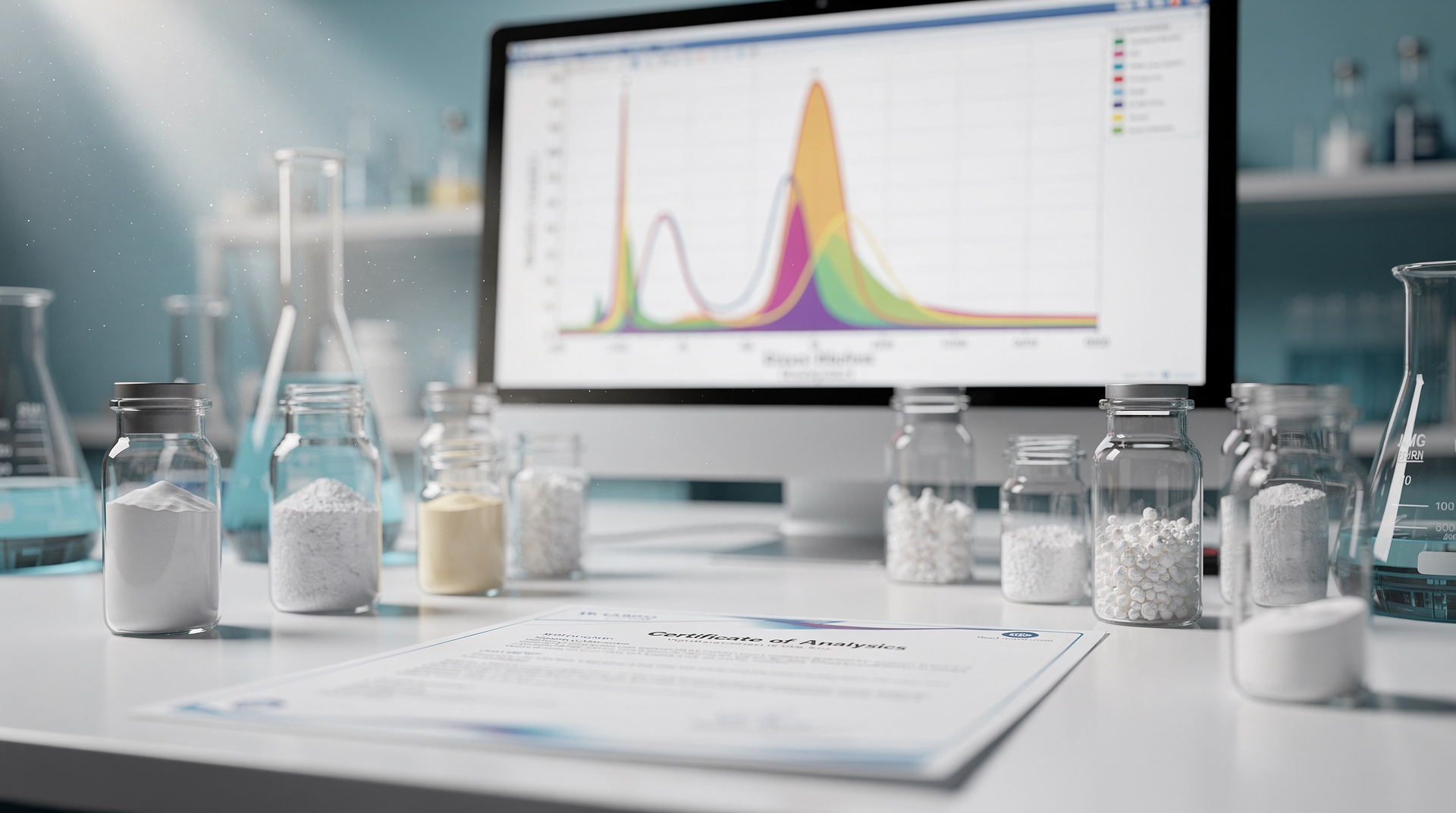
What "Verified" Means at Verified Peptides
At Verified Peptides, the term "verified" embodies our steadfast commitment to supplying research-grade peptides subjected to comprehensive and rigorous quality assurance (QA) processes. This verification guarantees that peptides conform precisely to their specified amino acid sequences, exhibit high chemical purity, and are free from contaminants, degradation products, or unintended modifications. It is essential to reiterate that these peptides are intended solely for laboratory and in vitro research use, and no therapeutic or clinical claims are made.
Our definition of "verified" extends beyond a mere marketing term; it represents transparency, scientific rigor, and traceability throughout the peptide supply chain and analytical verification workflow. Each lot of peptide is characterized thoroughly to provide researchers with well-documented physicochemical properties, ensuring dependable reproducibility in experimental applications.
Verification involves multiple layers of quality control, including sourcing from certified and reputable manufacturers, independent third-party analytical testing, and stringent documentation protocols. This multi-faceted approach supports research integrity and compliance with best practices in peptide science.
Our Quality Assurance Process Step by Step
The quality assurance process at Verified Peptides is meticulously designed to ensure that every peptide delivered adheres to the highest scientific standards for research reagents. The process spans from initial sourcing to final storage and shipping, encompassing synthesis verification, analytical characterization, and documentation. The key steps include:
- Initial sourcing from reputable, certified peptide manufacturers: We collaborate exclusively with manufacturers holding ISO certifications (e.g., ISO 9001 for quality management systems) and validated peptide synthesis protocols. These manufacturers apply solid-phase peptide synthesis (SPPS) techniques with tight process controls to reduce batch-to-batch variability and synthesis errors.
- Batch-specific independent third-party laboratory testing: Each lot undergoes analytical verification by accredited external laboratories, ensuring objective assessment of peptide purity, identity, and contaminants using validated methods under GLP-like conditions.
- Issuance of a detailed Certificate of Analysis (COA): A comprehensive COA accompanies each peptide shipment, summarizing test results such as purity, molecular weight, endotoxin levels, and sterility status, along with traceability information including batch numbers and testing dates.
- Purity analysis using high-performance liquid chromatography (HPLC): Validated reverse-phase HPLC methods quantify the peptide’s chemical purity and identify impurity profiles by measuring area-under-curve (AUC) of chromatographic peaks.
- Identity and sequence confirmation via mass spectrometry: Techniques such as electrospray ionization (ESI) or matrix-assisted laser desorption ionization (MALDI) mass spectrometry confirm molecular weight and, where applicable, sequence integrity through tandem MS/MS fragmentation analysis.
- Sterility and endotoxin testing when applicable: For peptides intended for cell culture or sensitive biological assays, sterility testing (USP 71) and endotoxin quantification via Limulus Amebocyte Lysate (LAL) assay ensure microbial contamination is absent or below stringent thresholds.
- Cold-chain storage and shipment to preserve peptide integrity: Peptides are stored and shipped under controlled temperature conditions, utilizing lyophilization and temperature-monitored packaging to maintain long-term stability and prevent degradation.
This multi-tiered QA framework ensures that researchers receive peptides with consistent and well-documented quality attributes, supporting reproducible and credible experimental outcomes.
Third-Party / Independent Lab Testing
Central to our verification philosophy is reliance on independent laboratory testing, which provides unbiased, objective data distinct from manufacturer-supplied certificates. Third-party laboratories accredited to ISO/IEC 17025 standards employ validated, standardized analytical protocols with rigorous quality controls. This accreditation ensures that analytical methods meet international standards for accuracy, precision, and reproducibility.
Typical third-party testing encompasses:
- High-performance liquid chromatography (HPLC) for purity profiling.
- Liquid chromatography-mass spectrometry (LC-MS) or MALDI-MS for identity and sequence confirmation.
- Limulus Amebocyte Lysate (LAL) assay for endotoxin quantification.
- Sterility testing via incubation in microbiological growth media following USP 71 guidelines.
The use of external laboratories minimizes conflicts of interest and enhances confidence in the peptide data, especially when sourcing from multiple manufacturers or for peptides with complex modifications. Detailed analytical reports provided by these laboratories include raw data, chromatograms, spectral data, and quantitative results, which are reviewed by our QA team before release.
The Certificate of Analysis (COA) and How to Read One
Every peptide lot shipped by Verified Peptides is accompanied by a batch-specific Certificate of Analysis (COA), a critical document that transparently communicates the peptide’s analytical profile and traceability. Understanding the key fields and data in the COA enables researchers to verify the peptide’s suitability for their experimental needs.
- Batch or lot number: A unique alphanumeric code linking the peptide to its production, testing, and documentation records, facilitating traceability and quality audits.
- Peptide sequence and theoretical molecular weight: The amino acid sequence and corresponding calculated monoisotopic and average molecular weights provide a reference for identity confirmation.
- Purity percentage by HPLC: Expressed as the percentage of the main peak area relative to the total integrated chromatogram area, representing chemical homogeneity.
- HPLC chromatogram: A graphical plot showing retention times and peak areas; a dominant main peak with minimal secondary peaks indicates high purity.
- Mass spectrometry data: Includes observed molecular ion peaks (m/z values) and, when available, fragmentation spectra (MS/MS) that confirm sequence identity and detect modifications or impurities.
- Endotoxin levels (EU/mg): Quantitative endotoxin measurements reported in endotoxin units per milligram, critical for assessing suitability in cell-based assays.
- Sterility testing results: Pass/fail status from microbiological growth assays confirming absence of bacterial or fungal contamination.
- Testing dates and laboratory accreditation: Dates of analysis verify data currency, and laboratory accreditation status affirms adherence to quality standards.
- Storage and handling instructions: Recommendations for temperature, light exposure, and solvent compatibility to maintain peptide stability post-delivery.
By providing comprehensive COAs, Verified Peptides empowers researchers to critically evaluate each peptide batch, ensuring alignment with experimental requirements and compliance with institutional or regulatory standards.
Purity by HPLC (What the % Means)
High-performance liquid chromatography (HPLC) is the gold standard technique for assessing the chemical purity of peptide preparations. In reverse-phase HPLC, peptides are separated on hydrophobic stationary phases (usually C18 columns) using solvent gradients (e.g., acetonitrile with 0.1% trifluoroacetic acid) to resolve the target peptide from impurities.
The chromatogram plots absorbance versus retention time, typically monitoring at 214 nm or 220 nm wavelengths where peptide bonds absorb strongly. Each peak corresponds to a chemical species present in the sample.
Purity percentage is calculated by integrating the area under the main peptide peak and expressing it as a proportion of the total integrated area of all detectable peaks. For example, a purity of 98% indicates that 98% of chromatogram area is attributable to the target peptide, with 2% representing impurities such as:
- Truncated sequences from incomplete synthesis.
- Deletion or insertion variants.
- Oxidation or deamidation products.
- Residual solvents or reagents.
It is important for researchers to note that HPLC purity reflects chemical composition but does not confirm peptide sequence or biological function. Nonetheless, purity above 95% is generally preferred for research peptides to minimize confounding effects from impurities that could interfere with assays or cause toxicity.
In addition to quantitative purity, qualitative assessment of the chromatogram is critical. Key considerations include:
- Main peak shape: A sharp, symmetrical peak indicates good chromatographic behavior and peptide homogeneity.
- Baseline noise: A stable, flat baseline without drift or spikes supports data reliability.
- Presence of additional peaks: Multiple unresolved or shoulder peaks may indicate synthesis variability or degradation.
Validated HPLC methods with standardized columns, solvents, and gradients ensure data comparability and reproducibility across batches.
Identity & Sequence Confirmation by Mass Spectrometry
Mass spectrometry (MS) is indispensable for confirming peptide identity and verifying sequence integrity. Peptides are ionized through methods such as electrospray ionization (ESI) or matrix-assisted laser desorption ionization (MALDI), producing charged species whose mass-to-charge (m/z) ratios are measured with high precision.
The primary output is a mass spectrum displaying ion peaks. The molecular ion peak corresponds to the intact peptide and should match the theoretical molecular weight calculated from the amino acid sequence, considering isotopic distributions. Typical mass accuracy is within a few parts per million (ppm) for high-resolution instruments.
Tandem mass spectrometry (MS/MS) further fragments the molecular ions, generating fragment ion spectra that provide sequence-specific information. Analyzing the pattern of b- and y-type ions confirms amino acid order and detects sequence errors or modifications such as phosphorylation, methylation, or acetylation.
MS also identifies common synthesis-related side products including:
- Oxidized methionine or tryptophan residues.
- Deamidated asparagine or glutamine residues.
- Incomplete deprotection or sequence truncations.
Mass spectrometry data, combined with HPLC, provide a robust verification of peptide identity and purity.
Sterility and Endotoxin Considerations for Research Material
While many peptides are used in cell-free biochemical assays where sterility is not critical, peptides intended for cell culture, tissue engineering, or other sensitive biological applications require stringent control of microbial contamination and endotoxin levels.
Sterility testing follows protocols such as USP 71, involving incubation of peptide samples in nutrient media (e.g., tryptic soy broth and fluid thioglycollate medium) under aerobic and anaerobic conditions. Absence of microbial growth after specified incubation periods confirms sterility.
Endotoxin testing is essential because endotoxins (lipopolysaccharides from Gram-negative bacteria) can induce potent cellular responses, confounding experimental results. The Limulus Amebocyte Lysate (LAL) assay exploits the blood clotting reaction of horseshoe crab amoebocytes exposed to endotoxin, providing a sensitive and quantifiable measure of endotoxin concentration.
Endotoxin levels are reported in endotoxin units per milligram (EU/mg) of peptide. Verified Peptides offers batches with low endotoxin content, commonly below 0.1 EU/mg, suitable for sensitive in vitro assays. This ensures that observed biological effects are attributable to the peptide and not endotoxin contamination.
Maintaining sterility and endotoxin control requires aseptic manufacturing conditions, validated cleaning procedures, and sterile packaging.
USP / European Pharmacopoeia Reference Standards
Verified Peptides aligns its analytical quality control programs with internationally recognized compendial standards, including the United States Pharmacopeia (USP) and the European Pharmacopoeia (Ph. Eur.). These standards define benchmarks for peptide purity, identity, impurity limits, and testing methodologies, facilitating consistency and comparability across research and regulatory environments.
Pharmacopoeial monographs specify:
- Acceptable purity thresholds, often exceeding 95%.
- Validated chromatographic conditions for purity testing (column type, mobile phase, gradient).
- Mass spectrometric parameters for identity confirmation.
- Microbial limits and endotoxin thresholds relevant for sterile peptide preparations.
By adhering to these standards, Verified Peptides ensures that our products meet widely accepted scientific criteria. This harmonization assists researchers in obtaining peptides compatible with Good Laboratory Practice (GLP) and supports regulatory compliance in preclinical research workflows.
Storage, Cold Chain, and Stability
Peptides are vulnerable biomolecules susceptible to degradation through hydrolysis, oxidation, racemization, aggregation, and deamidation if improperly stored. Maintaining peptide integrity requires adherence to optimized storage and shipment conditions.
Verified Peptides employs comprehensive cold-chain management protocols that preserve peptide quality from synthesis through delivery. Depending on peptide properties, storage temperatures range from refrigerated (2–8°C) to frozen (-20°C or lower). Strict temperature monitoring and validated packaging prevent exposure to temperature excursions that accelerate degradation.
Many peptides are supplied in lyophilized (freeze-dried) form, a dehydration process that removes water and stabilizes peptides by minimizing hydrolytic and oxidative pathways. Lyophilization also improves shelf life, enabling long-term storage at freezer temperatures without loss of purity.
Scientific studies demonstrate that peptides stored at ambient temperature or in solution without lyophilization exhibit increased impurity formation and reduced analytical stability over days to weeks. Therefore, lyophilization combined with cold storage is the standard for maintaining verified peptide quality.
Upon receipt, researchers are advised to store lyophilized peptides desiccated at -20°C or below, minimizing freeze-thaw cycles. Peptides should be reconstituted immediately prior to use with appropriate solvents to preserve functional properties.
Signs of Untested or Counterfeit Research Peptides
Research integrity depends on the authenticity and quality of peptide reagents. Unfortunately, untested or counterfeit peptides are a growing concern in the research community. Researchers should be vigilant to identify and avoid such materials, which can jeopardize experimental validity.
Common indicators of unverified or counterfeit peptides include:
- Absence of a batch-specific Certificate of Analysis (COA): Legitimate peptides are always accompanied by detailed, lot-specific analytical documentation.
- Missing or inconsistent batch/lot numbers: Without unique identifiers, traceability and quality audits are impossible.
- Vague or incomplete product information: Lack of explicit amino acid sequences, molecular weights, or purity data is a red flag.
- Unrealistically low pricing: Prices significantly below market norms often reflect substandard or counterfeit products.
- Poor labeling and packaging: Illegible text, absence of expiration dates, and missing storage instructions suggest non-compliance with quality standards.
- Reliance solely on manufacturer’s certificates: Lack of independent third-party testing increases the risk of inaccurate or falsified data.
Use of unverified peptides can introduce impurities, incorrect sequences, or microbial contaminants, leading to unreliable or irreproducible research results. Verified Peptides strictly adheres to rigorous QA protocols to eliminate such risks and supports researchers with transparent, traceable data.
Additional Analytical Techniques Supporting Verification
High-Resolution Mass Spectrometry (HRMS)
Beyond standard mass spectrometry, high-resolution mass spectrometry (HRMS) offers ultra-precise exact mass measurements, resolving isotopic fine structure and subtle mass differences. This capability enables detection of minor post-synthetic modifications, isotopic labeling, or contaminants that might be indistinguishable by lower-resolution instruments.
HRMS instruments, such as Orbitrap or time-of-flight (TOF) analyzers, provide mass accuracy within sub-ppm ranges, enhancing confidence in peptide identity verification—particularly for complex or modified peptides.
Peptide Quantification and Amino Acid Analysis
Accurate peptide quantification is essential for experimental reproducibility and interpretation. Verified Peptides employs methods such as:
- Amino acid analysis (AAA): Complete acid hydrolysis of the peptide followed by chromatographic quantification of individual amino acids provides absolute peptide concentration independent of UV chromophores.
- UV absorbance quantification: Measurement of absorbance at 214 nm or 280 nm (for aromatic residues) using known extinction coefficients offers rapid, non-destructive concentration assessment.
These quantification methods support precise dosing in in vitro studies and ensure consistency across batches.
Assessing Peptide Solubility and Aggregation
Peptide aggregation can significantly impact solubility, bioavailability, and assay performance. Analytical techniques to characterize aggregation state include:
- Dynamic light scattering (DLS): Measures hydrodynamic radius to detect soluble aggregates.
- Size-exclusion chromatography (SEC): Separates monomeric peptides from oligomers or aggregates, providing quantitative assessment.
- Analytical ultracentrifugation (AUC): Determines sedimentation coefficients and molecular weight distribution in solution.
Understanding aggregation informs formulation and handling recommendations to maintain peptide functionality.
Summary
Verified Peptides’ verification process is integral to our brand’s scientific integrity and reliability. Through collaboration with reputable manufacturers, independent third-party testing, comprehensive Certificates of Analysis, and stringent cold-chain and storage protocols, we deliver peptides with well-characterized, reproducible quality attributes. Our adherence to pharmacopeial standards and incorporation of advanced analytical techniques empower researchers to confidently utilize our peptides in diverse research applications. We emphasize that these peptides are strictly for research use only and do not carry therapeutic or clinical claims.
Frequently asked questions
What does "verified" mean at Verified Peptides?
It means each peptide has undergone independent, rigorous testing to confirm its identity, purity, and quality, supported by transparent documentation and intended solely for laboratory research use.
What is a Certificate of Analysis (COA)?
A COA is a detailed report provided with each peptide batch that summarizes test results such as purity, molecular weight, identity confirmation, and sterility data to ensure quality and traceability.
How is peptide purity measured?
Purity is primarily measured using high-performance liquid chromatography (HPLC), which quantifies the percentage of the desired peptide relative to impurities in the sample.
How do you confirm a peptide's identity?
Peptide identity is confirmed using mass spectrometry, which precisely measures the molecular mass and verifies the amino acid sequence.
How should research peptides be stored?
Research peptides should be stored under cold-chain conditions—refrigerated or frozen—to maintain stability and prevent degradation before use in experiments.
Related guides
Ready to apply this? Browse science-grounded compound profiles.