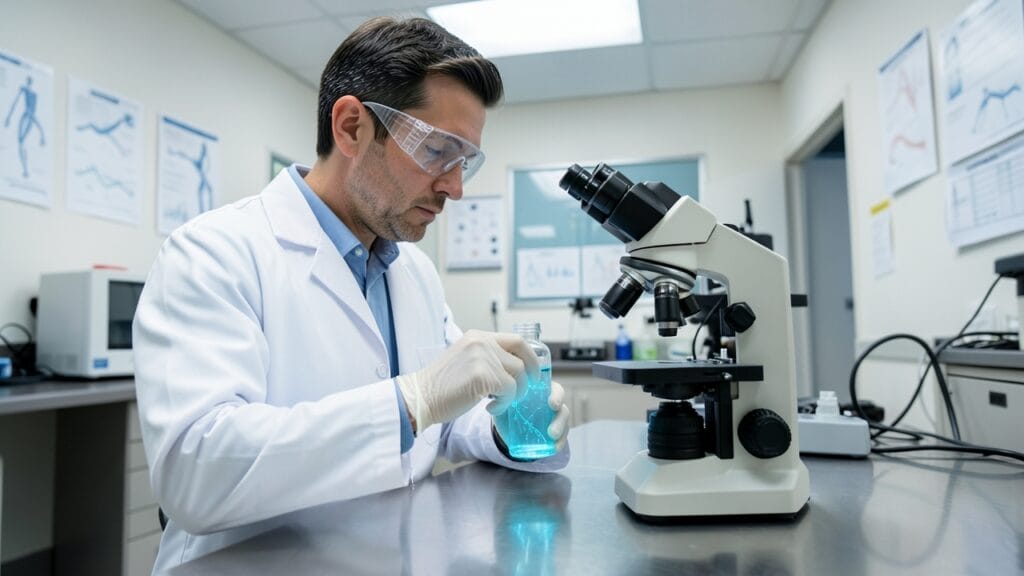
Research Peptides: Purity, Testing, and Storage Insights for Lab Research
HPLC and mass spectrometry. These methods are crucial to confirm peptide purity levels, which directly influence your study’s reliability.
Research peptides used in lab research must have high purity—typically above 95%—to ensure reliable results, verified through analytical testing methods like HPLC and mass spectrometry. Proper storage, such as refrigeration or freezing in lyophilized form and protection from moisture and light, is essential to maintain peptide stability and efficacy over time.
The Part Most Companies Skip: Why Purity Verification Isn’t Optional
HPLC is the analytical gold standard for verifying research-peptide purity, resolving a peptide from its impurities by their differing column retention times. Mass spectrometry confirmation complements this by verifying the molecular weight matches the intended synthetic peptide sequence.
For example, I’ve seen batches labeled as >98% purity that on third-party analysis fell below 90%, often due to degraded material or synthesis impurities. This can skew your data, increase variability, or introduce confounding factors.
Understanding Lyophilized vs Liquid Research Peptides: When to Choose Each
Lyophilized peptides are freeze-dried powders that offer extended shelf life and simplified shipping logistics. Liquid peptides for research arrive pre-dissolved but are more sensitive to storage conditions, often requiring continuous refrigeration at 2–8°C.
Both have pros and cons:
- Lyophilized peptides: More stable, better for long-term storage, require reconstitution before use.
- Liquid peptides: Ready to use but need careful cold storage and carry a higher risk of degradation.
For long experiments or rare peptides, I lean towards lyophilized forms. It’s easier to control peptide stability in a lyophilized state, especially given the humidity and temperature swings typical here.
How to Store Research Peptides to Preserve Stability
Proper storage is non-negotiable. Here’s what I follow for synthetic peptides intended for research:
- Store lyophilized peptides in sealed vials under desiccation, preferably at –20°C or colder.
- Minimize exposure to moisture and air to prevent hydrolysis or oxidation.
- For liquid peptides, maintain refrigeration at 2–8°C and avoid freeze-thaw cycles.
- Always aliquot peptides into small volumes to reduce contamination risk and degradation.
In laboratory chemical storage, moisture control and temperature stability are critical factors that influence compound shelf life. Peptides are no exception.
Peptide Synthesis Services: What to Expect Beyond Just a Product
When you buy research peptides online, consider the synthesis service’s ability to provide detailed Certificates of Analysis (COAs). A COA should include:
- HPLC purity chromatograms
- Mass spectrometry data confirming molecular weight
- Peptide sequence verification
- Storage and handling guidelines specific to each batch
A reputable peptide supplier uses ISO/IEC 17025-accredited laboratories for testing and strictly follows compendial standards like USP to ensure batch consistency. I’ve regularly reviewed COAs from suppliers like Waters Corporation and Thermo Fisher Scientific to ensure compliance with these standards.
What a Fair Price Actually Looks Like for Research-Grade Peptides
Pricing varies widely across suppliers, but a fair price reflects the rigor of synthesis, purification, and testing. High-purity peptides (>98% by HPLC) with full identity verification cost more because of the quality control involved.
Expect to pay more for peptides with extensive third-party lab testing and Certificates of Analysis. Those without these assurances may be cheaper but pose a risk for unreliable experimental data. I’ve seen “budget” peptides fail identity verification regularly, leading to wasted resources.
Three Questions You Should Ask Before Ordering Research Peptides
- What purity levels and testing methods confirm this peptide’s identity? Demand HPLC purity above 95% confirmed by mass spectrometry.
- How is the peptide stored and handled during shipping? Check if lyophilized peptides come with desiccants and temperature control measures.
- Is there a Certificate of Analysis available for each batch? Vendors should provide detailed testing data, not just a label claim.
These questions help ensure the compound you receive matches specifications critical for reproducible research.
Research FAQ
- What causes peptide degradation in lab conditions?
- Peptide degradation primarily results from moisture exposure, temperature fluctuations, and repeated freeze-thaw cycles. Oxidation and hydrolysis are common chemical pathways affecting peptide integrity.
- How do I know if a peptide is stable enough for my experiment?
- Check the supplier’s COA for stability testing data and storage recommendations. Lyophilized peptides generally have greater stability, particularly when stored at –20°C with desiccants.
- Is it safe to order peptides without third-party verification?
- Not recommended. Without independent HPLC and mass spectrometry verification, you risk receiving peptides with impurities or incorrect sequences, compromising your research validity.
- How do I choose between lyophilized and liquid peptides?
- Consider experiment duration and storage capabilities. Lyophilized peptides offer longer shelf-life and shipping flexibility; liquid peptides provide convenience but require stringent cold storage.
- What brands are reputable for peptide lab testing?
- In my experience, testing instruments and reagents from Waters Corporation, Thermo Fisher Scientific, and MilliporeSigma provide reliable, reproducible results aligned with industry standards.
Research-grade peptide: a synthetic peptide manufactured and verified to a high purity specification, commonly 98 percent or greater by HPLC and confirmed by mass spectrometry, intended solely for in-vitro laboratory research.
Certificate of Analysis (COA): a detailed report from an accredited laboratory showing the results of analytical tests that verify the purity, identity, and quality of a peptide batch.
Lyophilization: a freeze-drying process that removes moisture from peptides to stabilize them for long-term storage and shipment.
Thorough peptide characterization by multiple analytical methods is essential to ensure batch-to-batch consistency and experimental reproducibility.
For more details on purity and verification, you can visit my post on Research Peptides: Purity, Verification, and Practical Considerations or learn about sourcing at How to Source Bulk Research Peptides in the United States.
Peer-reviewed literature indexed on PubMed consistently emphasizes the importance of standardized peptide characterization to reduce variability in experimental results.
Strict adherence to validated storage protocols maintains chemical integrity in laboratory reagents, and that applies directly to synthetic peptides.
The short answer: rigorous testing and appropriate storage are just as vital as selecting the right peptide sequence. Do not overlook these fundamentals if you want consistent results in your lab.
Research use only. All products and information from Verified Peptides are intended strictly for in-vitro laboratory and scientific research. They are not for human consumption, are not approved by the FDA, and are not intended to diagnose, treat, cure, or prevent any disease. Always consult a licensed physician for medical advice.