Custom Peptide Synthesis
- Type
- Service
- Reading time
- 12 min
- Sections
- 6
- FAQs answered
- 5
Custom peptide synthesis is the laboratory production of specific amino acid sequences tailored to research requirements. This includes precise control over sequence, purity, scale, and chemical modifications, enabling researchers to obtain made-to-order peptides for a wide range of experimental applications.
Key takeaways
- Custom peptide synthesis allows researchers to commission peptides with exact sequences, modifications, and purity levels.
- The synthesis process involves SPPS, cleavage, purification via HPLC, verification by mass spectrometry, and COA issuance.
- Purity targets typically exceed 95%, verified through analytical methods to ensure consistent research-grade quality.
- Lead times vary by project complexity and scale; researchers must contact suppliers for current turnaround estimates.
- This service supports academic, CRO, and institutional labs requiring bespoke peptides for diverse experimental needs.
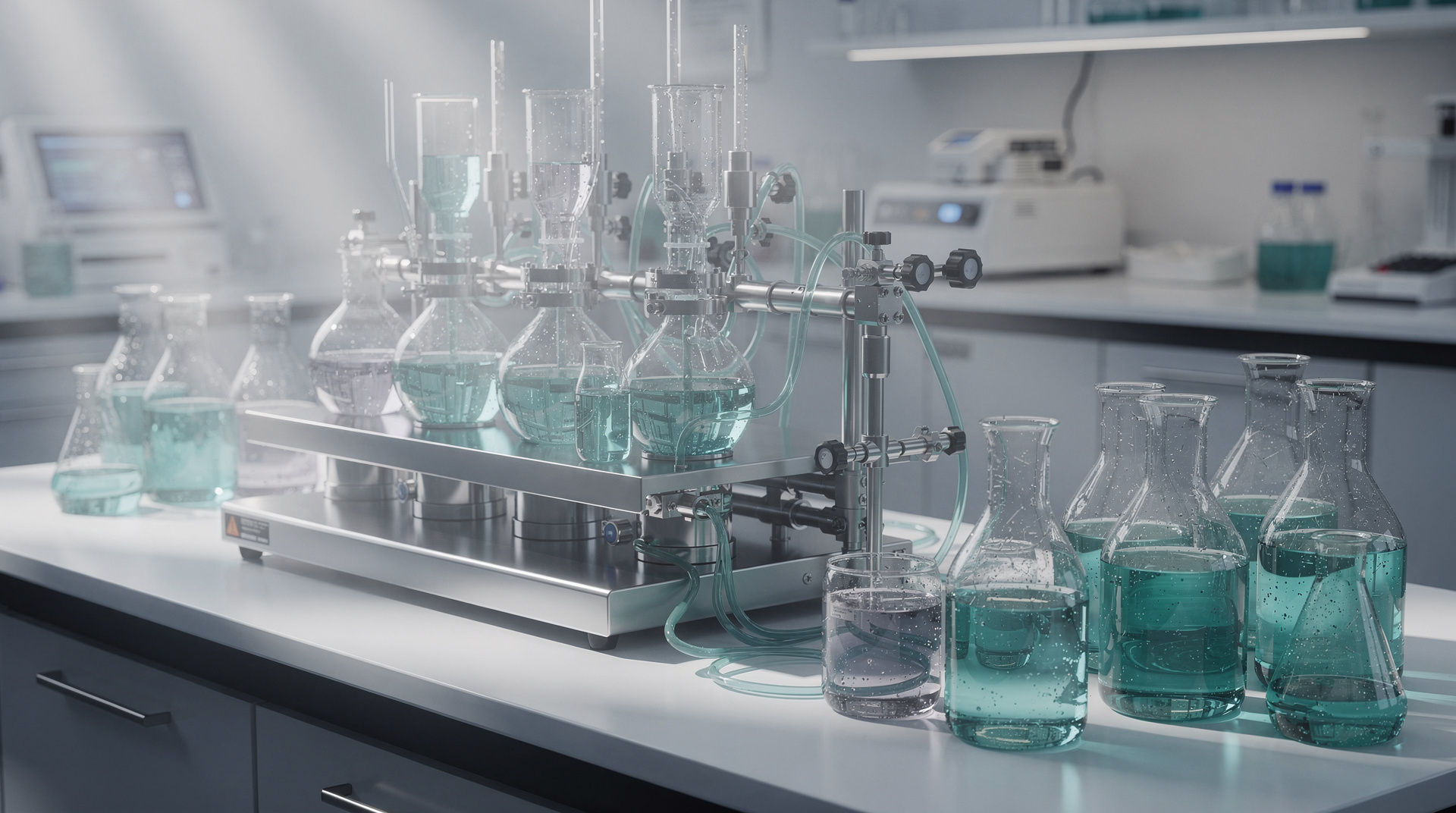
Understanding Custom Peptide Synthesis
Custom peptide synthesis refers to the laboratory process of producing peptides with user-specified amino acid sequences, scales, and purity standards for research use. Researchers may require peptides incorporating various chemical modifications such as acetylation, amidation, or labeling with fluorescent or affinity tags. These made-to-order research peptides enable detailed study of protein interactions, signaling pathways, or as molecular probes in biochemical assays.
Researchers comparing the custom research peptides US laboratories can commission should weigh three things above all: sequence fidelity, independently documented purity, and verifiable identity confirmation. Each is covered below.
In the United States, custom research peptides are widely commissioned by academic laboratories, contract research organizations (CROs), and institutional research facilities. These entities rely on bespoke peptide synthesis laboratories equipped to deliver peptides that meet stringent quality and reproducibility criteria essential for rigorous scientific investigation.
The flexibility of custom peptide synthesis allows users to specify not only the amino acid sequence but also the desired scale of synthesis—from milligram quantities suitable for pilot studies to gram-scale batches for more extensive experimentation. Purity levels can be tailored as well, with high-purity peptides often exceeding 95% to minimize confounding effects in sensitive assays.
Beyond the basic sequence and scale, researchers can also request specific peptide characteristics that impact experimental outcomes. For example, peptides can be synthesized with specific chirality or include D-amino acids to study protease resistance or binding specificity. Additionally, researchers may request peptides with altered solubility profiles or sequences optimized for particular assay conditions.
Ensuring research-grade quality involves more than synthesis alone; traceability and documentation throughout the process are critical. Reputable peptide synthesis providers maintain detailed batch records, allowing each peptide lot to be tracked back through synthesis conditions, purification steps, and analytical verification. This traceability supports reproducibility in experimental workflows, enabling researchers to replicate findings or troubleshoot unexpected results efficiently.
Traceability also includes maintaining a rigorous chain-of-custody for all raw materials and reagents, from amino acid sourcing to final packaging. This detailed record-keeping ensures that any variability in peptide quality can be traced to its origin, which is crucial for research environments demanding high confidence in reagent integrity.
Common Modifications in Custom Peptide Synthesis
- Acetylation and Amidation: N-terminal acetylation and C-terminal amidation are common modifications used to mimic natural peptide termini or improve stability. These modifications often enhance peptide resistance to exopeptidases and can influence receptor binding properties. The precise chemical conditions for these modifications are carefully controlled during synthesis and confirmed analytically. For example, acetylation involves the introduction of an acetyl group at the N-terminus post-synthesis or during the final coupling step, which is verified by mass shifts in mass spectrometry and characteristic retention time changes in HPLC profiles.
- Labeling: Peptides can be synthesized with fluorescent labels (e.g., FITC, TAMRA) or affinity tags (e.g., biotin) to facilitate detection or purification in downstream applications. Labeling can be site-specific, such as attachment to the N-terminus or a particular lysine residue, to preserve biological activity. The integrity and degree of labeling are verified by mass spectrometry and HPLC analysis to ensure functionality in research assays. The label incorporation efficiency is quantified by comparing peak areas in HPLC chromatograms and by observing expected mass increases corresponding to the label in mass spectrometry data.
- Unnatural Amino Acids and Post-Translational Modifications: Incorporation of non-standard residues such as phosphoserine or methylated lysine allows studies of modified protein forms. These analogues require specialized protected amino acid derivatives and synthesis protocols to maintain modification stability and specificity. Analytical methods confirm successful incorporation and absence of dephosphorylation or demethylation during synthesis and purification. Mass spectrometry fragmentation (MS/MS) is often employed to verify site-specific incorporation, while HPLC purity profiles reveal the presence or absence of side products.
- Peptide Cyclization and Conjugation: Custom peptides may also be synthesized with cyclization through disulfide bridges or chemical linkers to mimic conformational constraints found in native proteins. Such modifications are validated by mass spectrometry and sometimes by nuclear magnetic resonance (NMR) to confirm structural integrity for research applications. Cyclization efficiency is typically monitored by comparing reduced and non-reduced mass spectra, confirming the formation of disulfide bonds, and HPLC retention times shift due to altered peptide conformation.
The Custom Peptide Synthesis Process
At Verified Peptides, our peptide custom synthesis service follows a rigorous multi-step process designed to ensure high-quality, research-grade peptides. Below is an expanded overview of the typical workflow from initial inquiry through final delivery, detailing the quality controls and analytical methods integrated at each stage.
1. Consultation and Quotation
Clients initiate the process by providing detailed specifications including peptide sequence, desired scale (milligram to gram quantities), target purity, and any required modifications. Our team reviews these requirements and provides a formal quote outlining estimated costs and timelines. This consultation phase ensures alignment on project scope and technical feasibility, including assessment of sequence complexity, modification feasibility, and purification challenges.
During consultation, we also discuss packaging options, labeling requirements, and documentation needs such as Certificates of Analysis (COA) that detail analytical results. This ensures researchers receive peptides packaged and documented in a manner consistent with their laboratory protocols and regulatory compliance.
Additionally, we advise on optimal storage and handling conditions based on the peptide’s properties and modifications, which is critical for maintaining peptide integrity during shipping and storage. For example, peptides with oxidation-sensitive residues may require inert atmosphere packaging or storage at -20°C.
2. Solid-Phase Peptide Synthesis (SPPS)
The core synthesis utilizes automated solid-phase peptide synthesis, a robust and widely accepted method in the peptide synthesis field. Amino acids are sequentially coupled to a growing peptide chain anchored to an insoluble resin. This stepwise approach allows precise control over sequence assembly and efficient incorporation of modifications.
Our SPPS platforms employ Fmoc (9-fluorenylmethoxycarbonyl) chemistry, the industry standard for solid-phase peptide synthesis, which offers mild deprotection conditions and high coupling efficiency. Each coupling step is monitored to minimize deletion sequences or coupling failures, and optimized reagent excesses are used to maximize yield and sequence fidelity.
Automated synthesizers are programmed to accommodate user-specified sequences and modifications, including incorporation of non-standard amino acids or labels. We maintain strict environmental controls to prevent cross-contamination and degradation during synthesis, including controlled humidity and temperature environments to maintain reagent stability.
Throughout synthesis, in-process monitoring such as Kaiser tests or chloranil tests may be performed to confirm successful coupling steps, especially for longer or more complex sequences. These tests help detect incomplete reactions early, reducing risk of sequence errors.
3. Cleavage and Deprotection
Following chain assembly, the peptide is cleaved from the resin and protecting groups are removed using suitable chemical reagents, commonly trifluoroacetic acid (TFA)-based cocktails. The cleavage conditions are optimized based on the peptide sequence and modifications to prevent side reactions such as oxidation or alkylation.
This step liberates the free peptide while preserving the intended modifications. The crude peptide is then precipitated and collected for initial purity assessment.
Batch records document cleavage times, reagent lots, and environmental parameters, supporting traceability and reproducibility. For oxidation-prone peptides, scavengers such as triisopropylsilane (TIPS) or ethanedithiol (EDT) may be included in the cleavage cocktail to protect sensitive side chains.
4. HPLC Purification
Crude peptides typically contain by-products and truncated sequences. High-performance liquid chromatography (HPLC) purification isolates the target peptide based on retention time and hydrophobicity, achieving desired purity levels. Our bespoke peptide synthesis laboratory employs validated purification protocols tailored to each peptide’s properties.
We use reverse-phase HPLC (RP-HPLC) with gradient elution, typically using C18 columns, to exploit peptide hydrophobicity differences. Analytical HPLC chromatograms provide detailed purity profiles, including area-under-curve (AUC) quantification of the main peptide peak relative to impurities.
Purity targets are commonly set above 95%, with some projects requiring ultra-pure peptides exceeding 98%. The exact purification strategy—single or multiple rounds of HPLC, or orthogonal chromatography—is selected based on peptide complexity and research use requirements.
Interpreting the HPLC data involves analyzing peak shape, retention time, and the relative percentage of the target peptide peak. The area under the curve (AUC) quantifies the abundance of the desired peptide relative to total chromatogram area, with impurities appearing as additional peaks. Sharp, symmetric peaks with minimal shoulders indicate high purity and sample homogeneity.
Purification fractions are collected and analyzed by analytical HPLC and mass spectrometry to confirm identity and purity before pooling and lyophilization. In some cases, desalting steps or orthogonal purifications such as ion-exchange chromatography are employed to remove specific impurities.
5. Mass-Spectrometry Verification
Purified peptides undergo mass spectrometry analysis to confirm molecular weight and verify sequence integrity. This step is critical to ensure the peptide corresponds exactly to the requested design, free from significant impurities or modifications.
We employ electrospray ionization (ESI) or matrix-assisted laser desorption/ionization time-of-flight (MALDI-TOF) mass spectrometry techniques depending on peptide size and properties. The experimental molecular weight is compared to theoretical values calculated from the exact amino acid composition including modifications.
In addition to confirming intact mass, fragmentation (MS/MS) analysis may be performed to verify sequence identity for peptides with complex modifications or critical research applications. This approach fragments the peptide into smaller ions, enabling confirmation of sequence order and site-specific modifications.
Mass spectrometry data are integrated into the Certificate of Analysis, documenting the precise molecular weight and confirming batch identity. This analytical confirmation supports batch-to-batch consistency and provides researchers confidence in the peptide’s identity.
6. Certificate of Analysis (COA) Issuance
Each custom peptide is accompanied by a COA documenting purity (typically by analytical HPLC), identity (mass spectrometry), and other quality parameters. This certificate provides transparency and traceability, supporting compliance with research standards.
Standard COA fields include:
- Peptide sequence and modifications
- Batch or lot number
- Analytical HPLC chromatogram with retention times and purity percentage (area under curve)
- Mass spectrometry data with observed molecular weight
- Peptide quantity and form (lyophilized powder, solution)
- Storage and handling recommendations for research use
The COA often features detailed graphs such as HPLC chromatograms showing peak retention times and relative peak areas, accompanied by tables summarizing quantitative purity percentages. The mass spectrometry section includes molecular weight spectra and annotations of observed mass peaks corresponding to expected peptide ions.
COAs are archived and accessible upon request to support batch-to-batch consistency verification and quality audits. This documentation is essential for laboratories maintaining rigorous reagent tracking and quality assurance protocols.
Purity Guarantees and Quality Assurance
Achieving and verifying high purity is fundamental to the reliability of custom peptides in research applications. Verified Peptides targets high purity levels, commonly >95%, which minimizes interference from impurities in biological assays.
Purity is assessed using analytical HPLC, which separates components based on chemical properties, providing a chromatogram that quantifies peptide content relative to contaminants. The area-under-curve (AUC) calculation enables precise quantitation of the main peptide peak as a percentage of total detected material. This metric is essential to validate that peptides meet or exceed requested purity specifications.
Mass spectrometry complements HPLC by confirming molecular identity and detecting unexpected modifications or degradation products that might not separate chromatographically. For example, the presence of oxidation, deamidation, or truncated sequences can be detected through mass shifts or additional mass peaks.
Our quality control procedures comply with industry best practices and recognized standards such as ISO/IEC 17025, ensuring consistent, reproducible peptide quality. While our facilities align with GMP principles to the extent applicable for research-use-only materials, our focus remains on providing transparent and rigorous analytical documentation suitable for laboratory research.
Batch-to-batch consistency is achieved through standardized synthesis protocols, reagent quality controls, and thorough analytical characterization. Each peptide lot undergoes the same stringent testing regimen before release, minimizing variability in experimental outcomes. This includes consistent reagent lot sourcing, instrument calibration, and process controls documented in batch manufacturing records.
In addition to purity and identity, stability testing under recommended storage conditions is performed for select peptides to inform researchers of optimal handling practices, thereby preserving peptide integrity for extended use in research projects. Stability studies may include accelerated aging tests and periodic re-analysis of stored samples to assess degradation trends.
We also provide researchers with recommendations for peptide storage, typically advising lyophilized peptides be stored at -20°C or -80°C in desiccated conditions, and solutions be aliquoted and frozen to prevent multiple freeze-thaw cycles that can degrade peptide quality.
Storage and Handling of Custom Peptides
Proper storage and handling of custom peptides are critical to maintain their integrity and performance in research applications. Peptides are generally supplied as lyophilized powders, which provide enhanced stability compared to solutions. Upon receipt, researchers should store lyophilized peptides at low temperatures, preferably -20°C or colder, in tightly sealed vials with desiccants to minimize moisture exposure.
When peptides are dissolved for experimental use, it is recommended to prepare aliquots at appropriate concentrations in research-grade solvents, such as sterile water, dimethyl sulfoxide (DMSO), or buffered solutions compatible with downstream assays. Aliquots should be stored at -80°C to avoid repeated freeze-thaw cycles that can cause aggregation or degradation.
For peptides containing oxidation-sensitive residues like methionine or cysteine, handling under inert atmosphere or addition of antioxidants may be necessary. Our COAs include specific handling recommendations tailored to the peptide’s chemical properties and modifications to assist researchers in optimizing experimental outcomes.
Laboratories should also maintain detailed records of peptide lot numbers and storage conditions to facilitate traceability and troubleshooting if assay inconsistencies arise.
Delivery Timeline and Ordering Process
Due to variability in peptide length, sequence complexity, modification requirements, and synthesis scale, delivery timelines for custom peptides can vary. Verified Peptides advises researchers to contact us directly for current lead times tailored to their specific project parameters.
To request a custom peptide synthesis project, researchers typically provide the following information:
- Exact amino acid sequence, including any modifications
- Desired quantity (scale) of peptide
- Purity targets
- Any labeling or special packaging requirements
- Intended research application to aid technical consultation
Our team then provides a detailed quote and project plan. Upon confirmation, synthesis commences following the established workflow.
Packaging options include lyophilized powder or solutions in research-grade solvents, with vial sizes and labeling customized to support laboratory inventory systems. We also provide guidance on peptide storage and handling to maintain quality between delivery and use.
For expedited or large-scale projects, additional project management support is available to coordinate timelines and ensure alignment with research schedules. However, due to the bespoke nature of custom peptide synthesis, lead times are influenced by sequence complexity and requested modifications.
Who Benefits from Custom Peptide Synthesis Services?
Custom peptide synthesis is an essential resource for a broad spectrum of research organizations within the United States, including:
- Academic Laboratories: University and research institute labs utilize bespoke peptides for mechanistic studies, assay development, and molecular biology research. Custom peptides enable exploration of protein-protein interactions, epitope mapping, and functional domain analysis.
- Contract Research Organizations (CROs): CROs conducting preclinical or discovery-stage research integrate custom peptides into screening campaigns, assay validation, and biomarker studies. High-quality peptides ensure reproducibility and reliability in large-scale compound evaluation and target validation efforts.
- Institutional Researchers: Government and private institution scientists rely on made to order research peptides to support diverse projects in biochemistry, pharmacology, and cell biology. Peptides tailored to specific experimental needs facilitate innovation across multiple scientific disciplines.
By partnering with a dedicated bespoke peptide synthesis laboratory, researchers ensure access to high-quality, tailored peptides that meet the demands of cutting-edge experimental science. Comprehensive analytical documentation and rigorous quality assurance support confident interpretation of experimental results.
At Verified Peptides, we are committed to providing reliable custom peptide synthesis services to support your laboratory’s research goals with precision and transparency. Contact us to discuss your project and receive a tailored quote reflecting your unique research needs.
Part of our research services. Explore the compound catalog or read what “verified” means.
Frequently asked questions
What is the typical purity level offered in custom peptide synthesis?
Most custom peptides are synthesized to high purity standards exceeding 95%, verified by analytical HPLC and mass spectrometry, to ensure suitability for sensitive research applications.
Can I request peptides with chemical modifications such as labeling or acetylation?
Yes, bespoke peptide synthesis laboratories routinely incorporate modifications like N-terminal acetylation, C-terminal amidation, fluorescent labels, and affinity tags as part of custom research peptides US services.
How do I request a quote for made to order research peptides?
Researchers should provide the peptide sequence, desired scale, purity target, and any modifications to the supplier. Verified Peptides then reviews this information and issues a detailed quote and project plan.
What analytical methods verify peptide identity and purity?
Purity is primarily confirmed by high-performance liquid chromatography (HPLC), while mass spectrometry verifies molecular weight and sequence accuracy. Together, these methods support the issuance of a Certificate of Analysis.
Who typically uses custom peptide synthesis services in the US?
Academic researchers, CROs, and institutional laboratories in the United States rely on peptide custom synthesis services to obtain tailored peptides for a wide range of biochemical and molecular biology studies.
Related guides
Ready to apply this? Browse science-grounded compound profiles.