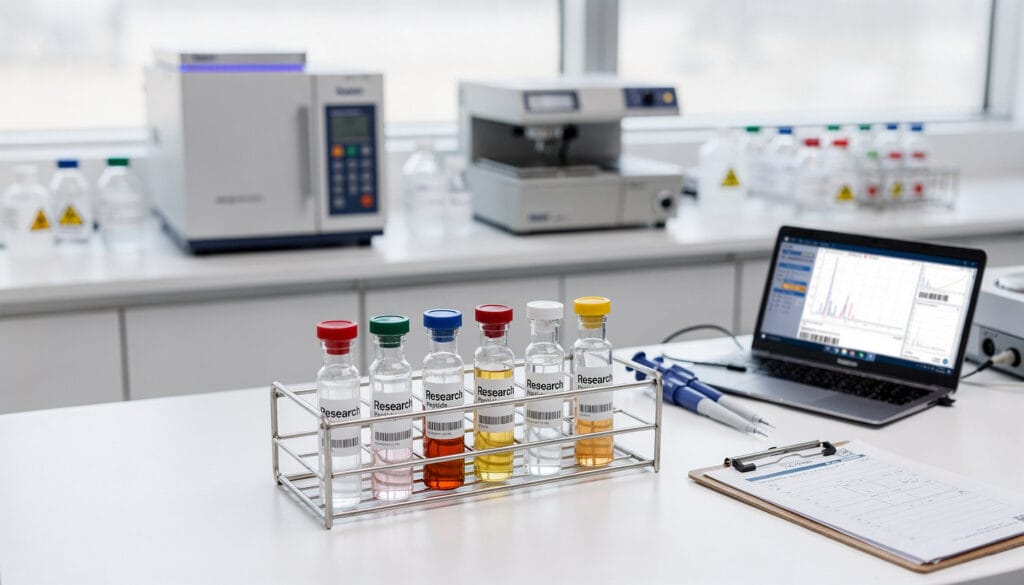
Research Peptides: Purity, Verification, and Practical Considerations
Research-grade peptides are not off-the-shelf chemicals you grab on impulse. They require careful attention to identity confirmation, batch-to-batch consistency, and storage to preserve stability. In my experience, overlooking these details creates common pitfalls that waste time and skew experimental outcomes.
Research peptides must undergo rigorous purity testing, typically exceeding 95%, verified through methods like HPLC and mass spectrometry to ensure accuracy and safety. Practical considerations include proper storage, handling, and sourcing from reputable suppliers to maintain peptide integrity and research validity.
The Part Most Companies Skip: Verifying Peptide Identity Thoroughly
mass spectrometry confirmation is essential to verify the correct molecular weight and sequence.
I’ve seen many peptides with reported purities above 95% fail identity verification, which can cause misleading experimental results. That’s why I insist on certificates of analysis (COAs) from accredited labs that include both HPLC chromatograms and mass-spec data. The best suppliers also provide peptide sequencing techniques such as LC-MS/MS fragmentation data. Without this, you’re trusting assumptions rather than evidence.
Research-grade peptide: a synthetic peptide manufactured and verified to a high purity specification, commonly 98 percent or greater by HPLC and confirmed by mass spectrometry, intended solely for in-vitro laboratory research.
For this reason, how to store research peptides is not a trivial detail. I recommend lyophilized peptides be kept frozen at -20°C or lower and protected from moisture using desiccants and sealed containers. Avoid repeated freeze-thaw cycles, which I’ve seen cause significant peptide instability in northern Florida’s seasonal humidity swings.
Common Issues with Peptide Research and How to Spot Them
Inconsistent or degraded peptides often present as variability in assay results or unexpected biological activity. Here’s a checklist I use to diagnose peptide-related issues:
- Check the COA for both purity and identity confirmation.
- Confirm storage conditions have been consistently maintained.
- Verify the peptide batch number matches the experimental records.
- Use peptide analysis software to interpret HPLC and mass spec data when available.
- Consider peptide stability testing results if provided, particularly for peptides prone to oxidation or aggregation.
These simple steps catch many preventable errors before costly downstream experiments fail.
Bioinformatics Tools and Peptide Sequencing Techniques I Recommend
Modern peptide research increasingly relies on bioinformatics tools for sequence prediction, modification mapping, and structural modeling. Tools like PEAKS or MaxQuant help analyze complex mass spectrometry data sets, which is crucial when confirming custom peptide synthesis outcomes.
Peptide sequencing techniques, particularly tandem mass spectrometry (MS/MS), remain the gold standard for verifying synthesized peptides beyond mass alone. I’ve seen researchers underestimate how valuable these techniques are for peptides with post-synthetic modifications or novel sequences.
What a Fair Price Actually Looks Like for Synthetic Peptides for Research
Pricing transparency in peptide synthesis services varies widely. I’ve encountered synthetic peptides that cost two to three times more than comparable products without any added verification or documentation. For reliable custom peptide synthesis, expect to pay a premium for thorough analytical testing and COA inclusion.
Beware of ultra-low prices with vague product specs or no third-party testing. The cost of repeating experiments due to poor peptide quality far exceeds the initial savings. When you buy research peptides online, demand clear details on purity standards, analytical methods used, and storage recommendations.
How to Source Bulk Research Peptides in the United States
If you are looking to source bulk research peptides, focus on suppliers who maintain rigorous quality controls and offer detailed batch documentation. I have referenced my approach in this guide to source bulk research peptides in the United States, which covers best practices and pitfalls.
Many researchers overlook the value of long-term supplier relationships that prioritize peptide stability testing and ongoing quality assurance. The difference is evident in reproducibility and confidence in your experimental data.
Scientific Standards in Peptide Purity and Verification
HPLC is the analytical gold standard for verifying research-peptide purity, resolving a peptide from its impurities by their differing column retention times. Mass spectrometry complements this by confirming molecular mass and sequence identity, essential for custom peptide synthesis.
Peptide purity standards typically call for 95% or higher purity, but I recommend specifying 98% or greater for critical applications. Peptide stability testing under controlled conditions further ensures the peptide maintains integrity throughout its shelf life.
Peptide purity standard: a specification setting the minimum acceptable purity, usually measured by HPLC, required for a peptide to be considered suitable for research use.
Peptide stability testing: analytical procedures assessing how a peptide’s purity and structure hold up under various storage and handling conditions over time.
Research FAQ
- How do I know if a research peptide is authentic? Authenticity is verified by matching the peptide’s expected molecular mass via mass spectrometry and confirming purity through HPLC, as documented on a Certificate of Analysis from accredited laboratories.
- Is it safe to store peptides at room temperature? Most synthetic peptides require storage at -20°C or below to maintain stability. Room temperature storage often accelerates degradation, especially in humid environments.
- What causes variability in peptide research results? Variability often arises from poor peptide purity, incorrect peptide sequence, improper storage, or degradation during handling.
- How do bioinformatics tools aid peptide research? These tools assist in predicting peptide structure, analyzing sequencing data, and mapping modifications, improving accuracy in peptide characterization.
- When should I request peptide stability testing? Stability testing is recommended when working with sensitive peptides, novel modifications, or when long-term storage is anticipated to ensure consistent experimental outcomes.
At Verified Peptides, I place utmost value on transparency and verifiable quality. That means every peptide I source is accompanied by Certificates of Analysis from ISO/IEC 17025-accredited labs, including both HPLC purity and mass spectrometry data. I use trusted analytical equipment from brands like Waters and Thermo Fisher in my verification workflows. This approach reflects the standards referenced in peer-reviewed literature indexed on PubMed and aligns with USP compendial expectations.
The short answer: rigorous characterization and appropriate storage dictate the reliability of your synthetic peptides for research. Cutting corners on these fronts leads to reproducibility issues that I’ve seen repeatedly across labs nationwide. I recommend thorough verification and attention to peptide stability as the foundation for any peptide research chemical application.
Research use only. All products and information from Verified Peptides are intended strictly for in-vitro laboratory and scientific research. They are not for human consumption, are not approved by the FDA, and are not intended to diagnose, treat, cure, or prevent any disease. Always consult a licensed physician for medical advice.